
Rhode Island Personal Injury Lawyer: Your Complete Guide to Filing a Claim
Getting hurt because of someone else’s negligence is stressful enough — you shouldn’t have to navigate confusing legal procedures and aggressive insurance adjusters on your own. A Rhode Island personal injury lawyer can guide you through the settlement process, and if necessary, through a lawsuit, so you can focus on recovering.
At our firm, you’ll work directly with an experienced attorney — not a paralegal — throughout your case. We handle cases on a contingency-fee basis, meaning you pay nothing upfront. We advance the costs of medical records, expert witness fees, and deposition expenses, and we’re only reimbursed once we secure a settlement or verdict on your behalf.
We offer evening appointments, home and hospital visits, and limited weekend availability. If your situation involves workers’ compensation or Social Security disability (SSI/SSDI), we can refer you to a trusted Rhode Island attorney who focuses specifically on those areas.
How to Choose the Best Personal Injury Attorney in Rhode Island
Word-of-mouth referrals used to be the primary way people found a personal injury lawyer — often through a probate or traffic attorney who knew someone that handled the occasional car accident case. The problem is that these referrals don’t always lead to attorneys who specialize in serious injury litigation.
Today, the internet makes it much easier to research and compare Rhode Island law firms that focus on car accidents, slip and falls, pedestrian accidents, and wrongful death claims. A few tips for narrowing your search:
- Look at organic search rankings. Firms that consistently appear on the first page of natural (non-paid) search results have typically built a strong reputation and track record — search engine rankings are, in a sense, a form of ongoing vetting.
- Be cautious of paid ads. A firm’s presence in sponsored search results doesn’t necessarily reflect experience or success rate the way organic rankings do.
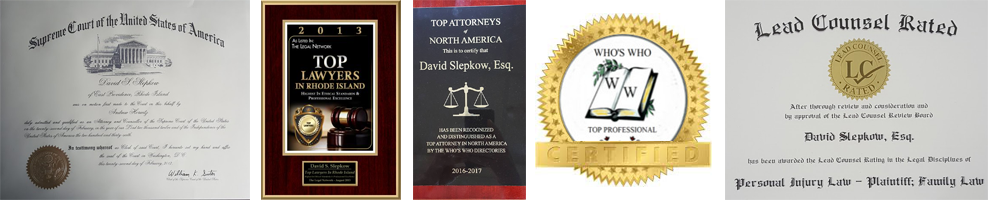
- Evaluate experience and reputation. Once you’ve built a shortlist, dig into each attorney’s track record, client reviews, and standing among peers in the legal community.
- Schedule a consultation. Meeting with a potential attorney helps you gauge whether you feel comfortable and confident in their ability to handle your case.
Frequently Asked Questions About Rhode Island Personal Injury Claims
What should I do immediately after a car accident in Rhode Island?
- Stop at the scene and notify local police right away.
- Exchange information with other involved parties — names, addresses, phone numbers, and insurance details.
- Take photos and videos of the scene, all vehicles involved, and any visible injuries.
- Collect contact information from any witnesses.
- Seek medical treatment as soon as possible, even if you feel fine. Waiting too long gives insurance companies an opening to argue your injuries weren’t caused by the crash
- .Avoid giving a statement to any insurance adjuster until you’ve spoken with an attorney.
- How is the value of my claim determined?
Valuing a personal injury case isn’t an exact science — it depends on a combination of factors, including:
- Pain and suffering
- Lost wages and diminished earning capacity
- The permanency of your injury
- Scarring or disfigurement
- Loss of consortium
- Total medical expenses
- Periods of disability
Medical bills are often one of the most heavily weighted factors, since they help establish the severity of the injury.
In cases involving a fatal crash — whether a car accident, motorcycle collision, or trucking accident — the executor or administrator of the deceased person’s estate must file a wrongful death claim in Providence Superior Court (or the appropriate county) on behalf of the statutory beneficiaries.
Is there a statute of limitations for personal injury claims in Rhode Island?
Yes. Rhode Island generally allows three years from the date of the accident to file a lawsuit for negligence-based claims, including car accidents, motorcycle accidents, and wrongful death. Miss this deadline, and you’ll likely be permanently barred from recovering compensation. Claims against a city or town come with much stricter notice requirements, so it’s important to consult an attorney promptly if a government entity may be involved.
What if the at-fault driver has no insurance?
You can still pursue a claim against the at-fault driver personally, but if they lack sufficient assets, recovery can be difficult. If you carry uninsured or underinsured motorist (UM/UIM) coverage, you can file a claim with your own insurance company instead.
What happens if I’m hit by a drunk or hit-and-run driver?
If the driver can’t be identified or lacks insurance, your own uninsured motorist coverage may apply. If the driver has insurance but not enough to cover your damages, underinsured motorist coverage can help fill the gap.
Does Slepkow Law handle workers’ compensation or SSDI claims?
No, but we’re happy to refer you to a trusted Rhode Island workers’ compensation attorney or Social Security disability lawyer if your situation calls for it.
Common Causes of Car Accidents in Rhode Island
A large share of Rhode Island crashes stem from violations of state traffic laws. Some of the most common causes include:
Speeding. Under R.I. Gen. Laws § 31-14-1, drivers can be cited for traveling at a speed that isn’t “reasonable and prudent” for existing conditions — even if they’re technically under the posted limit.
Distracted driving. While distractions behind the wheel have existed since the earliest days of driving, smartphones have dramatically increased the problem over the last decade or so.
- Illegal U-turns. R.I. Gen. Laws § 31-16-4 prohibits U-turns on curves or near the crest of a hill where oncoming traffic can’t see the turning vehicle from 500 feet away.
- Running red lights or stop signs. Some drivers blow through traffic signals intentionally; others do so due to carelessness or distraction. Either way, R.I. Gen. Laws § 31-13-4 requires drivers to obey traffic control devices.
- Pedestrian right-of-way violations. Under R.I. Gen. Laws § 31-13-6, pedestrians crossing with a green signal generally have the right of way, though they must yield to vehicles already in the intersection when the signal changes.
The Danger of Texting While Driving
Distracted driving — particularly texting — remains one of the leading causes of serious and fatal crashes nationwide. Consider the numbers:
Reading or sending a text takes a driver’s eyes off the road for roughly five seconds — at 55 mph, that’s the length of a football field traveled blind.
More than 650,000 drivers attempt to use a phone behind the wheel during daylight hours across the U.S.
Over 3,300 deaths in a single recent year were linked to distraction-related crashes.
Roughly a quarter of all crashes nationwide involve a driver who was texting.
Cell phone use behind the wheel contributes to more than 1.5 million crashes annually.
Texting while driving has been estimated to be up to six times more dangerous than driving drunk.
Teen drivers are especially at risk — having even one passenger in the car roughly doubles a teen’s likelihood of a fatal crash, and having multiple passengers increases that risk fivefold.
Texting requires manual, visual, and cognitive attention all at once — taking a driver’s hands off the wheel, eyes off the road, and mind off driving simultaneously. If distracted driving played a role in your accident, an experienced Rhode Island car accident attorney can help build the evidence needed to support your claim.
Common Injuries From Rhode Island Car Accidents
According to NHTSA data, more than 3 million people are injured in motor vehicle accidents in the U.S. each year. Head-on and side-impact collisions tend to produce the most severe injuries, even with modern airbag systems. Common injury categories include:
- Traumatic brain injuries — ranging from mild, sometimes hard-to-detect concussions to severe injuries affecting speech, memory, and motor function
- Other head injuries — including eye trauma, hearing loss, and facial or jaw fractures
- Neck and back injuries — whiplash, herniated discs, and spinal cord damage that can cause temporary or permanent paralysis
- Chest injuries — broken ribs or sternum fractures, especially without a seatbelt
- Ruptured diaphragm — caused by severe blunt or penetrating trauma to the lower chest
- Foot and ankle injuries — fractures, strains, and sprains
- Knee and leg injuries — including fractures and meniscus tears
- Abdominal and pelvic injuries — hip fractures and organ damage to the kidneys, spleen, or liver
- Traumatic amputation — most common in motorcycle accidents
Does Rhode Island Have No-Fault Insurance?
No. Rhode Island is a fault-based state for car and motorcycle accidents (the only no-fault system in RI applies to workers’ compensation). To recover damages, an injured person must prove that another party was negligent and that this negligence directly caused their injuries.
What if I was partially at fault?
Rhode Island follows a pure comparative fault rule. This means your compensation is reduced by your percentage of fault — but you can still recover damages even if you were mostly at fault. For example, a driver who was texting and ran a red light, but who is struck by another driver who was speeding and driving on defective brakes, could still recover a small percentage of damages even at 98% fault. (Note: this differs from states like Massachusetts, which uses a modified comparative fault standard — if you’re more than 50% at fault there, you recover nothing.)
Rear-End Collisions and Rhode Island Law
Rear-end accidents are among the most common causes of whiplash and other injuries in Rhode Island. Under Rhode Island case law, a rear-end collision establishes a prima facie case of negligence against the trailing driver (see Maglioli v. J.P. Noonan Transportation, Inc., 869 A.2d 71, 75 (R.I. 2005)). In other words, the burden effectively shifts to the rear driver to explain why they weren’t negligent.
Common causes of rear-end crashes include following too closely, distracted or reckless driving, speeding for conditions, poor weather, and mechanical failures like worn brakes or tires.
Building a Strong Personal Injury Case
An experienced Rhode Island injury attorney does more than negotiate with insurance companies — they build a complete picture of your damages, including:
- Past and future medical expenses. For catastrophic injuries, this may include long-term care, ongoing physical therapy, and expert medical testimony regarding future treatment needs.
- Lost income and diminished earning capacity, supported by expert or medical testimony where necessary.
- The collateral source rule, a well-established Rhode Island legal principle (see Votolato v. Merandi, 747 A.2d 455, 463 (R.I. 2000)) that generally prevents a defendant from reducing what they owe simply because the injured party received payments from another source, like health insurance.
Attorneys must also be prepared to negotiate skillfully, draft persuasive demand letters, and — if necessary — take a case to trial in Providence Superior Court, using accident reconstruction experts, medical testimony, and modern courtroom technology to present a compelling case.
Practical Tips If You’ve Been Injured
- Seek medical attention immediately — call an ambulance if the injury is serious, or go to urgent care or your primary doctor right away if not.
- Report the accident to police, as required under Rhode Island law for most motor vehicle collisions.
- Keep detailed records of every medical provider you see, along with treatment dates and medications prescribed.
- Attend every scheduled medical appointment. Gaps in treatment can be used by insurers to argue your injuries weren’t serious.
- Don’t exaggerate — or minimize — your symptoms with your medical providers.
- Take photos of vehicle damage and visible injuries before any repairs are made.
- Never sign a medical records release for the insurance company, and never give a recorded statement without first speaking to an attorney.
- Don’t accept a settlement offer before consulting a lawyer — early offers are almost always lower than what your claim may actually be worth.
What Compensation Can You Recover?
Depending on the nature of your accident and injuries, compensation may include:
- Medical expenses (ambulance, ER, surgery, ongoing treatment)
- Lost wages and future lost earning capacity
- Physical therapy and rehabilitation costs
- Compensation for disfigurement or permanent disability
- Pain, suffering, and emotional distress
- Wrongful death damages, including loss of companionship and financial support
Why Hire a Rhode Island Personal Injury Attorney?
Insurance adjusters are trained negotiators whose job is to minimize payouts — not to look out for your best interests. Without legal representation, injury victims often settle for far less than their claim is actually worth, or unknowingly damage their case with a poorly worded statement.
An experienced attorney can:
- Accurately value your claim based on medical evidence and long-term impact
- Handle all communication with insurance adjusters
- Gather evidence, including accident reconstruction and expert medical opinions
- Negotiate aggressively — or take your case to trial if a fair settlement isn’t offered
If you or a loved one has been injured in a Rhode Island car accident, motorcycle crash, slip and fall, or other type of negligence-related incident, don’t navigate the process alone. Contact our office today for a free, no-obligation consultation.
This article is for general informational purposes only and does not constitute legal advice. The Rhode Island Supreme Court licenses attorneys to practice law generally but does not certify specialists in specific practice areas