
Enfamil lawsuits* (Enfamil Lawsuits only pertain to Specialized PREMATURE and LBW Nutrition Products only available in liquid form and NOT Mead Johnson’s full-term, standard birth weight Enfamil formula and fortifiers) are causes of action against Mead Johnson Nutrition. These baby formula lawsuits allege that consumers were not properly warned that the Enfamil Specialized PREMATURE and LBW Nutrition Products baby formula can result in preterm infants diagnosed with necrotizing enterocolitis (NEC). This severe gastrointestinal sickness could cause permanent complications and could result in death. The Specialized Enfamil PREMATURE and LBW Nutrition Products baby formula has become linked to cronobacter, salmonella, and meningitis injuries. The following products were also contaminated:
- Similac,
- Alimentum and
- EleCare baby formula (2022 recall)
- Enfamil Specialized PREMATURE and LBW Nutrition Products baby formula
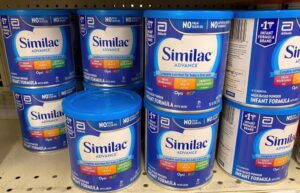
Contact us to pursue a possibly lucrative settlement with a high powered law firm on your side. Similac lawsuits have been pursued against the manufacturer, Abbott Laboratories, across the United States asserting that Similac cow-milk- formula for babies has resulted in numerous preemies developing gastrointestinal infection known as necrotizing enterocolitis (NEC). Parents are sold baby formula from practically the first moment they seek out prenatal care. The baby formula companies make a fortune on these products, and they want parents hooked on using them. They sell the idea of an easy way to feed the baby, so the parents can be less stressed. In the process, they make hundreds of millions of dollars each year. However, these products are not always safe. Premature infants have been injured by a bacterial infection called necrotizing enterocolitis (NEC). This happens far more often when they are fed cow’s milk-based formulas. As a result, the makers of Similac and Specialized PREMATURE and LBW Nutrition Products Enfamil are facing product liability lawsuits from parents of injured babies. If you need a top lawyer to file a similic lawsuit or a high powered attorney for a baby formula NEC Enfamil lawsuit, contact us.
- Meade Johnson’s corporate counsel sent me a letter requesting that I make the following information clear and Slepkow Law issues a correction. Per Meade Johnson’s corporate counsel “Although Mead Johnson denies all allegations related to the NEC Litigation, plaintiffs in said litigation allege that Specialized PREMATURE and LBW Nutrition Products only available in liquid form cause necrotizing enterocolitis. Thus, the NEC Litigation is strictly limited to Specialized PREMATURE and LBW Nutrition Products, not Mead Johnson’s full-term, standard birth weight Enfamil formula and fortifiers (“Full-Term and SBW Enfamil Nutrition Products”). There have been no allegations, claims or evidence of any kind in the NEC Litigation that have included or relate to Full-Term and SBW Enfamil Nutrition Products.”
Baby Formula lawsuit updates:
May 21, 2026
Seventh Circuit Weighs Revival of Dismissed Bellwether Case
The Seventh Circuit heard oral arguments this week in an appeal seeking to revive an NEC lawsuit that the MDL judge dismissed on summary judgment. The core question is one of causation: would a more robust warning about the NEC risks of preterm infant formula have changed the feeding decisions made by the family or the treating physician?
The plaintiff argued that the lower court made a fundamental error by treating formula supplementation as inevitable, and that it failed to give adequate weight to evidence that other feeding options could have been explored. The appellate judges pressed hard on what the treating doctor already knew and whether any additional warning would have made a real difference.
The defense contended that donor milk would not have been available in time, that the hospital had no way to use unpasteurized milk from another mother, and that on-site pasteurization was not a realistic option. Plaintiff’s counsel fired back, arguing that the defense and the lower court constructed a false binary between formula and donor milk, when a proper warning might have opened the door to other alternatives entirely.
This case is one of four bellwether cases the MDL judge dismissed in the consolidated NEC infant formula litigation. The trial court concluded that plaintiffs could not establish that a better warning would have changed the outcome. The appellate question now is whether that causation determination was one for a judge to make at all — or whether it belonged to a jury.
May 14, 2026
First Federal Bellwether Trials Finally Scheduled
After years of delay and repeated procedural setbacks, the first federal bellwether trial in the NEC infant formula MDL is moving forward. Judge Pallmeyer has set July 6, 2026 as the trial date for a case brought by a father whose son Daniel died within days of birth after receiving Enfamil. A second trial involving Similac, brought by a California family whose premature daughter suffered permanent injuries, is set for August 10, 2026.
The road to this point was anything but smooth. The trials were originally scheduled for April 2025 before pretrial disputes pushed everything back more than a year. Mead Johnson attempted to end the Enfamil case early with a summary judgment motion, but Judge Pallmeyer rejected it on May 8, 2026, clearing the way for a jury to finally hear Daniel’s story.
These two trials stand in for nearly 800 federal cases filed by families who allege that the makers of Similac and Enfamil knew, or should have known, that cow’s milk-based formula significantly increases the risk of NEC in premature infants — and stayed silent. State court juries have already heard this evidence and reached damning conclusions: a Missouri jury returned a verdict approaching $500 million, a Chicago jury ordered Mead Johnson to pay $60 million, and in April Abbott was hit with a $70 million verdict from a jury that deliberated for just ten hours. The federal families have waited a long time for their day in court. That day is July 6.
May 8, 2026
Missouri Appeals Court Upholds $495 Million Verdict Against Abbott
A Missouri appellate court has affirmed the full $495 million verdict against Abbott Laboratories in the Gill v. Abbott case. The jury had found that Abbott’s Similac Special Care 24 High Protein formula caused or contributed to a premature baby’s necrotizing enterocolitis. The verdict included $95 million in compensatory damages and $400 million in punitive damages.
The facts at the heart of this case were harrowing. The infant was born at just 26 weeks and weighed 777 grams. She was initially fed human milk in the NICU, but while still under 1,500 grams her feedings were supplemented with Abbott’s cow’s milk-based preterm formula. Within 24 hours she developed NEC symptoms. She ultimately lost most of her small intestine and suffered permanent brain damage, cerebral palsy, seizures, and a lifetime need for round-the-clock care.
The most significant legal issue may be the appeals court’s rejection of Abbott’s learned intermediary defense. Abbott argued that its formula, used in a NICU setting, should be treated like a medical product — meaning Abbott only had a duty to warn physicians, not parents. The court disagreed squarely. Preterm formula is food, not a prescription drug or medical device, and Abbott cannot use the learned intermediary doctrine to shift its responsibilities onto the doctors who relied on its products.
That ruling carries enormous weight for the broader litigation. It keeps the focus exactly where plaintiffs want it: on what Abbott knew, when it knew it, and what it chose not to tell parents and hospitals. The court also highlighted evidence that Abbott had internal awareness that very low birthweight babies faced elevated NEC risk — and chose not to communicate that clearly. This decision won’t guarantee wins across the board, but it firmly strengthens the plaintiff playbook and neutralizes several defenses Abbott had leaned on heavily.
May 5, 2026
Case Count: 797 Lawsuits in the MDL
The MDL now stands at 797 lawsuits. The trend is clear: new cases in 2026 are increasingly being filed in state court. The reason isn’t hard to identify. State court juries are returning massive verdicts while federal cases continue to get dismissed. Plaintiffs’ attorneys are following the results.
April 27, 2026
New Mead Johnson Lawsuit Filed by Sacramento Family
A Sacramento, California family has brought a new NEC lawsuit directly in the MDL, alleging that Mead Johnson’s Enfamil cow’s milk-based formula caused their premature infant to develop necrotizing enterocolitis. The child was born at 32 weeks and received Enfamil products at Kaiser Permanente South Bay Medical Center in Harbor City, California. The infant was diagnosed with NEC twice in February 2010. The family contends that Mead Johnson knew or should have known that its products significantly increase NEC risk in premature infants and failed to provide adequate warnings to parents, physicians, and hospitals.
April 10, 2026
Chicago Jury Awards $70 Million in Third Major NEC Verdict
A Chicago jury returned a $70 million verdict against Abbott, awarding four mothers whose premature infants developed NEC after being fed Similac in the NICU. The jury found that Abbott was aware of the NEC risk but continued marketing the formula aggressively to hospital intensive care units. The award included $53 million in compensatory damages and $17 million in punitive damages.
Abbott said it strongly disagrees with the verdict, plans to appeal, and maintains that its products are safe and supported by medical experts and regulators. This is Abbott’s second trial loss in this litigation. The company now faces more than 1,700 similar lawsuits across federal and state courts.
Abbott and Mead Johnson would be better served turning their attention toward settlement than channeling resources into appeals that the verdict record makes difficult to sustain.
April 2, 2026
Florida State Court Dismisses NEC Case Against Abbott
A Florida state judge dismissed an NEC case against Abbott just days before it was scheduled for trial. The case involved a premature infant who died after developing NEC following exposure to Similac Special Care. The court accepted Abbott’s argument that the claims failed because the treating physicians already understood the NEC risk associated with formula feeding and because the record contained no evidence that the doctors relied on any specific marketing representations from Abbott.
That is a setback, but a narrow one. It does not change the overall trajectory of the litigation. The lesson from Florida is that winning these cases requires more than showing that doctors knew about NEC in the abstract. Plaintiffs must demonstrate that Abbott failed to accurately communicate the true magnitude of the risk, and that hospitals adopted formula-feeding practices driven by cost, convenience, and institutional habit rather than by fully informed medical judgment. The distinction between a deliberate clinical choice and a default institutional policy matters greatly — and when plaintiffs can establish it, the learned intermediary defense loses much of its force.
March 26, 2026
Mother Takes the Stand in Chicago NEC Trial
A mother testified in the ongoing Illinois NEC trial that she would never have consented to her premature daughter receiving Abbott’s Similac Special Care 24 had she known the full extent of the NEC risk. Her daughter developed NEC twice, underwent multiple surgeries, lost portions of her intestines, and at age 13 still lives with serious complications including anemia, chronic diarrhea, ongoing medical testing, regular iron infusions, and significant social limitations.
On cross-examination, Abbott emphasized the child’s prematurity and the mother’s severe preeclampsia as competing risk factors, and pointed to medical records suggesting that physicians discussed NEC risks and the benefits of breast milk before delivery. The mother explained that she remembered little of those conversations — she was medicated, in significant pain, and overwhelmed. She told the jury she trusted her doctors, never read the formula label, and was not offered donor breast milk as an alternative.
March 5, 2026
New Similac NEC Trial Underway in Cook County
A new NEC trial involving four families is underway in Cook County. Each family alleges that their premature infant was fed Similac in the NICU and subsequently developed necrotizing enterocolitis. The families claim Abbott had been aware for years that cow’s milk-based formula elevated NEC risk in premature babies but continued selling the product into hospitals without adequate warning, resulting in permanent, life-altering injuries to their children.
Abbott’s defense follows the same general theory it has deployed throughout the litigation: that failure-to-warn claims collapse because parents did not personally see the label while the formula was being administered in the NICU. That argument is superficially clever and ultimately unpersuasive. The intended audience for an adequate NEC warning was never a parent browsing a grocery store shelf. It was the hospitals, NICU staff, and medical providers making feeding decisions for the most medically vulnerable infants imaginable.
This trial matters beyond its four plaintiffs. With the federal MDL moving slowly and more cases being steered toward state court, what happens in Cook County will be read as a signal about settlement. Another loss for Abbott increases the pressure considerably. A defense win gives the company room to argue that earlier verdicts were anomalies — though the weight of the evidence makes that argument harder to sustain with each trial.
March 3, 2026
Boston Jury Returns Defense Verdict in NEC Malpractice Case
A Boston jury found in favor of the defendant neonatologist in a medical malpractice case brought on behalf of a premature infant who developed NEC under the physician’s care. The child suffered extensive bowel loss and was left with short gut syndrome, requiring G-tube feeding for approximately four years. The family alleged the physician failed to timely recognize worsening symptoms and delayed necessary interventions including imaging, antibiotic administration, and nasogastric decompression.
This case was tried as a traditional malpractice claim against the treating doctor and is separate from the national NEC infant formula MDL, where the focus is on whether manufacturers of cow’s milk-based formula failed to warn about the product’s NEC risks. The defense argued in Boston that the physician complied with accepted neonatal standards and that NEC can progress even when care is appropriate. The jury agreed. It is a painful outcome for a family facing lifelong consequences from a devastating disease.
March 1, 2026
Seventh Circuit Signals Skepticism About Federal Retention of State NEC Cases
A Seventh Circuit panel signaled this week that it is skeptical of the MDL judge’s decision to keep five Pennsylvania-based NEC cases in federal court rather than remanding them to state court. The central question on appeal is whether the district court properly invoked the fraudulent joinder doctrine to retain jurisdiction. The lower court had found that plaintiffs, despite having viable negligence claims against in-state Pennsylvania hospitals, demonstrated no real intent to pursue those claims — and used that finding to keep the cases in the MDL.
Abbott argued that naming the hospitals was purely a jurisdictional maneuver and that plaintiffs effectively abandoned those claims through minimal discovery effort. Plaintiffs countered that an intent-based fraudulent joinder test has no foundation in the removal statute and would create serious administrative problems. They also argued the defense may have missed the 30-day removal deadline.
The appellate panel’s skepticism is well-placed. Using litigation conduct — rather than the viability of the underlying claims — as the basis for fraudulent joinder is a significant departure from established doctrine. It risks turning the fraudulent joinder standard into a tool for corporate defendants to manipulate forum selection in ways the statute does not authorize.
February 24, 2026
MDL Case Count Reaches 775
The MDL grew by six cases this week, reaching 775 lawsuits. But the broader filing trend is pointing elsewhere. More plaintiffs’ attorneys are routing new NEC cases to state court, where the results have been concrete and substantial. The $495 million Missouri verdict and the $60 million Illinois verdict were once viewed skeptically by those who doubted juries could navigate the scientific complexity of NEC causation. Those doubts have been answered. Juries have heard the evidence and held the manufacturers accountable. Until the federal MDL begins producing comparable outcomes, the drift toward state court will continue.
February 15, 2026
Pediatric Research Article Concedes Key Points Despite Pro-Defendant Framing
Pediatric Research published a review article examining the legal, clinical, and scientific debates surrounding preterm infant formula and NEC. The authors are openly skeptical of the plaintiffs’ position, emphasizing the absence of conclusive causal proof, noting that NEC can occur in breastfed infants, and cautioning against allowing courtroom outcomes to drive medical practice.
But the article cannot escape the facts at the center of this litigation. Even on its own terms, it acknowledges that human milk is consistently more protective, that cow’s milk-based products have long been flagged as a concern in the literature, and that juries have already returned massive verdicts against the manufacturers. It also cites a meta-analysis finding that formula-fed preterm infants face nearly double the NEC risk compared to those receiving donor milk.
A pro-defendant article that still must concede all of that is not the defense the manufacturers were hoping for.
September 2, 2025
Abbott Strikes Defiant Tone on Earnings Call
Abbott’s CEO Robert Ford was asked directly about the NEC litigation on the company’s Q2 2025 earnings call and left no ambiguity about his posture. He rejected any suggestion of settlement, affirmed the company’s full confidence in its products, and went so far as to suggest Abbott would rather exit the market than allow courtroom outcomes to override medical and regulatory judgment. The tone was combative and uncompromising.
That kind of performance is standard on earnings calls, where companies project strength to shareholders and downplay litigation exposure. Mass tort history is littered with examples of companies that vowed to fight to the last and then settled shortly afterward. Abbott’s rhetoric should be read in that context.
August 27, 2025
Jacksonville Family Files New Similac Lawsuit
A Jacksonville, Florida family filed a new NEC lawsuit in the MDL alleging that their premature daughter developed NEC after being given Similac and Similac Human Milk Fortifier products by Abbott in the NICU. The child was born at 27 weeks and weighed 1,000 grams. The family alleges that Abbott knowingly marketed its bovine-based formula as a safe substitute for human milk despite internal evidence to the contrary, and that the company systematically downplayed NEC risk through deceptive marketing aimed at both parents and healthcare providers.
August 23, 2025
Court Partially Limits Key Defense Expert
The MDL judge partially granted plaintiffs’ motion to exclude defense experts, finding significant methodological problems in how several experts had drawn their conclusions. The most consequential ruling targeted Dr. Larry Hedges, a lead expert for Mead Johnson, who admitted to using incorrect data when analyzing a key study — errors that made the formula appear safer than the data actually supported. The court barred him from testifying on any analysis built on that flawed foundation. Other defense experts were permitted to testify, though the court noted problems with their study selection and the sources they chose to exclude. The ruling limits the manufacturers’ ability to lean on their most scientifically shaky arguments at trial.
August 1, 2025
Second Bellwether Dismissed After Causation Expert Excluded
The second bellwether trial in the NEC MDL will not reach a jury. The MDL judge granted summary judgment to Abbott after finding that the plaintiff’s causation expert could not offer an opinion specifically applicable to infants of the plaintiff’s son’s gestational age and weight. The trial, which had been weeks away, is now off the calendar.
The ruling reflects a pattern that has concerned plaintiffs throughout this litigation. Rather than allowing causation experts to be tested through live testimony and cross-examination, the MDL court has applied increasingly narrow factual fit requirements under Daubert, resulting in dismissals before any jury hears the underlying facts. The judge did not challenge the expert’s broader methodology or general conclusions — only their application to this specific child’s circumstances.
This is a significant reason why plaintiffs’ attorneys are directing new cases to state court. In state venues, juries — not judges — are more likely to serve as the arbiter of what causation evidence is persuasive. That forum shift is not a retreat; it is a deliberate strategic response to how the MDL has been managed.
July 12, 2025
Pennsylvania Cases Kept in Federal Court — A Questionable Ruling
Judge Pallmeyer denied remand in six cases originally filed in Pennsylvania, finding fraudulent joinder based not on the legal sufficiency of the claims against the in-state hospital defendants — which the court had previously acknowledged were viable — but on plaintiffs’ litigation conduct. The court found that minimal discovery activity and an unwillingness to appeal the state court’s hospital dismissals demonstrated no real intent to pursue those claims.
This is a novel and troubling doctrine. Evaluating fraudulent joinder through the lens of a party’s litigation strategy rather than the merits of the underlying claims is a significant departure from how the doctrine has traditionally operated, and it effectively gives defendants a mechanism to challenge a plaintiff’s forum choice even when the joined claims are legally sound.
Judge Pallmeyer certified two questions for immediate appeal, including whether litigation conduct alone can establish fraudulent joinder. The Seventh Circuit’s answer will have real consequences for the broader mass tort landscape. If courts can use perceived strategic behavior as a basis for fraudulent joinder, defendants gain a powerful new tool for removing cases from state court regardless of whether the underlying claims are genuine.
May 14, 2025
Judge Preserves Plaintiffs’ Core Causation Experts
In a pivotal ruling, Judge Pallmeyer denied the defense’s Daubert motions seeking to exclude the two key general causation experts supporting plaintiffs’ central theory: that cow’s milk-based formula substantially increases NEC risk in premature infants.
Pediatric epidemiologist Dr. Logan Spector, whose systematic review and meta-analysis of more than two dozen studies showed a statistically significant NEC risk increase in formula-fed versus human milk-fed premature infants, survived the defense challenge entirely. Biostatistician Dr. Rebecca Betensky’s supporting meta-analyses, which were not challenged, showed a 67% increased NEC risk in randomized trials, a 226% increased risk in cohort studies, and a 135% increased odds ratio in case-control studies.
Neonatologist Dr. Jennifer Sucre’s testimony on biological plausibility was also upheld. Her analysis explained how the complex proteins and fats in cow’s milk-based formula can overwhelm the immature gut, encourage harmful bacterial growth, and trigger the inflammatory cascades associated with NEC development. The court rejected allegations of cherry-picking, noting her comprehensive review of over 500 studies.
With both experts intact, the court denied summary judgment. The cases will proceed. This ruling was the foundation the MDL needed before any bellwether trial could be meaningful.
May 2, 2025
First Bellwether Dismissed Before Trial
The MDL judge entered judgment for Abbott Laboratories in the first bellwether case, finding the company not liable for the death of an infant who had consumed Similac. The ruling came less than two weeks before the scheduled trial date. The case was, by most accounts, the weakest of the bellwether selections from a factual standpoint, and the outcome, while disappointing, was not a significant surprise.
July 2025- There are over 740 necrotizing enterocolitis baby formula lawsuits in the federal MDL (3026) U.S. District Judge Rebecca Pallmeyer from the Northern District of Illinois is the presiding judge over the baby formula MDL. There have been no reported lawsuit settlements in the MDL. No jury verdict have occurred in the MDL.
July 24, 2025- Keosha Diggs lawsuit which was the 2nd Bellwether trial ended when the Judge granted Defendant’s motion for summary judgment. Diggs is a Maryland resident, asserting that her baby, suffered NEC after imbibing baby formula products causing severe permanent injuries.
April 2025- The initial bellwether trial in the MDL scheduled for April 2025 was dismissed by Justice Pallmeyer. The Judge ruled that the victim did not have enough evidence evidence to move forward with her lawsuit. .
October 2024- A St. Louis jury sided with the Manufacturers in a baby formula trial.
July 2024- A state Court in Missouri awarded $496 million to the victim.
March 14, 2024 – A jury from Illinois, St. Clair County, awarded the mother of an infant $60 million as a result of the premature baby death. The baby passed away from intestinal disease after imbibing Enfamil baby formula manufactured by Mead Johnson. The jury determined that Mead Johnson was liable for failing to warn of NEC.
12/27/23 – Two babies became infected with a very rare bacteria caused by baby formula consumption. A harmful bacteria that lead to baby formula recalls in 2022 has lead to infections in two infants in 2023. One baby in Kentucky died from the bacteria. A Missouri baby suffered brain damage. United States officials determined that these two invasive infections resulted from cronobacter sakazakii. These two babies consumed the powdered baby formula from Abbott Nutrition.
November 2023- “In the baby formula MDL, Judge Pallmeyer set up a bellwether process for selecting bellwether trials. Initially, there were 12 lawsuit complaints filed versus two distinct baby formula companies. The 12 lawsuits were subjected to discovery related to those specific cases. At a later time, the cohort was reduced to 8 trials. On October 25th, 2023 the judge in charge of the MDL promulgated an order setting forth the remaining 4 bellwether trials. These 4 trials were selected by both the victims and the manufacturers as the first bellwether trials. Two trials were selected by each side. These 4 trials will all be jury trials. Three lawsuits out of the 4 will be litigating wrongful death claims as a result of infants who died.
May 2023- “Abbott Laboratories (ABT.N) persuaded a federal judge to dismiss some claims in nationwide litigation over recalled baby formula. In a decision on Monday, U.S. District Judge Matthew Kennelly in Chicago dismissed claims by parents pursuing only “economic loss” claims related to Similac and other formula that they said had a “substantial risk” of bacteria contamination.” Reuters
1-23-23- “Late last week, Abbott officials confirmed that the company is cooperating with a criminal investigation by the Justice Department’s consumer protection division, which is looking into the Sturgis manufacturing plant.” About lawsuits
8-15-2022- “Parties involved in baby formula NEC lawsuits being pursued against the makers of Similac and Enfamil have presented a plan to the U.S. District Judge presiding over the litigation, outlining the process for selecting a group of 12 cases that will be prepared for a series of early bellwether trials.” About lawsuits
2-24-22- “Three popular baby formulas made by Abbot Nutrition have been recalled after four babies became sick with bacterial infections. The recall covers select lots of powdered Similac, Alimentum and EleCare formulas from Abbot’s facility in Sturgis, Michigan. The FDA is investigating complaints of four infant illnesses from three states – Minnesota, Ohio and Texas, though the product was shipped nationwide. All four cases required hospitalization and the bacteria – Cronobacter sakazakii and Salmonella– may have contributed to the death of one of the infants. Premature infants have critical nutrition needs. They need to grow from their very low birth weight. However, they often do not have the strength to make the sucking motion necessary to breastfeed from their mother. Many doctors simply give them formula as an easier way for them to get nutrition. Research shows exactly how dangerous that approach is. However, this practice has persisted for many years.” AL.com
2-24-2022- “HOUSTON, Texas (KTRK) — Parents are still throwing out certain cans of powder Similac infant formula after the FDA warned that it was connected to four cases of infant illnesses, including one death. Days after the recall, one Houston-area mother had to rush her 6-month-old to the ER, and says it has been one of her worst experiences.” ABC 13
2/18/22-“Abbott Nutrition’s baby formula recall has been expanded to include one lot of Similac PM 60/40. The Food and Drug Administration said in an update Monday that health officials were investigating an additional illness of Cronobacter sakazakii with exposure to powdered infant formula produced at the company’s Sturgis, Michigan facility. That baby also died of Cronobacter. “The most recent patient was reported to have consumed Abbott Nutrition’s Similac PM 60/40 product with the lot code 27032K800 prior to Cronobacter sakazakii infection,” the FDA said. Similac PM is considered “a specialty formula for certain infants who would benefit from lowered mineral intake.” It was not included in the previous recall for select lots of Similac, Alimentum and EleCare formulas announced Feb. 17.”USA Today
2/9/22- “Abbott Nutrition is recalling one lot of Similac PM 60/40 powdered infant formula due to another report of a dangerous bacterial infection. The Centers for Disease Control and Prevention and the US Food and Drug Administration are investigating reports and complaints of infant illness related to formula from Abbott’s facility in Sturgis, Michigan.” Top Class action
2-9-22- “A pair of consumers are separately targeting CVS Pharmacy and CVS Health Corporation over health concerns related to products. Plaintiff Stephanie Surratt claims CVS Pharmacy sells a formula called Toddler Beginnings that is intended for children between 9 and 18 months old that is misleadingly similar to infant formula. Surratt claims CVS Pharmacy makes the formula similar-looking to infant formula to give caregivers the “incorrect impression that the Toddler Beginnings is what children should be fed in the ‘next stage’ beyond infancy.” Top class action
HOW NEC PUTS A BABY’S LIFE IN DANGER
NEC is a very serious and potentially deadly condition. A premature baby’s digestive system is vulnerable and immature. When the baby develops an infection, they could suffer permanent damage. With NEC, the infection can permanently kill parts of the intestine. This makes a hole, and fluid can seep into the abdominal cavity. Losing a large part of the intestine can impact the baby for the rest of their life, if they even survive NEC at all. Up to 30% of babies who develop NEC will die from the condition.
In general, one in every 1,000 premature babies will develop NEC, but the rate is far higher among babies who received cow-milk formula. The Cleveland Clinic has defined necrotizing enterocolitis (NEC) as a “serious gastrointestinal problem that mostly affects premature babies. The condition inflames intestinal tissue, causing it to die.” The problem involves holes forming in a preemie child’s intestine. This could allow bacteria to possibly leak into the intestinal wall or perhaps the intestinal tract and the bacteria could enter the abdomen or bloodstream. NEC may cause to serious medical problems and lead preterm infants to require neonatal intensive care that can be life threatening. The Centers for Disease Control and Prevention (CDC) has determined that NEC is the 10th highest cause of fatality for preemie infants below 12 months.
COMMON SYMPTOMS OF NEC
NEC can cause the following symptoms in babies:
- Constipation
- Trouble gaining weight
- Distended abdomen
- Intense pain
- Discolored vomit
Specialized PREMATURE and LBW Nutrition Products ENFAMIL LAWSUITS*
If the infection progresses, the baby will develop symptoms consistent with an advanced infection. These could include:
- High fever
- Lethargy
- Shock
Doctors will often need to perform emergency surgery to remove the dead parts of the intestine. They often need to do multiple procedures. In the meantime, the baby suffers pain and discomfort. If they have lost a large part of their intestine, the pain will persist for the duration of their life.
RESEARCH SHOWS THAT BABIES FED COW-MILK FORMULA HAVE A MUCH HIGHER RISK OF NEC
For years, research has shown that cow-milk based formula can harm premature infants. Some of this data goes as far back as the early 1990s. About a decade ago, there were several more studies that confirmed what the early data showed. Research has documented that premature babies who have been fed cow-milk baby formula are three to seven times more likely to develop NEC.
As a result, the American Academy of Pediatrics issued a 2012 recommendation to doctors to only give human milk to premature infants. This could include:
- The mother’s milk
- The mother’s milk with fortifiers
- Human donor milk
Even with this warning and guidance, the makers of products like Similac and Enfamil failed to do anything in the face of mounting evidence that their products were dangerous. Initially, parents sued the doctors who gave these products to the babies. Parents won several major medical malpractice verdicts against physicians and hospitals when babies were seriously injured or died from NEC.
GROUNDS IN ENFAMIL AND SIMILAC PRODUCT LIABILITY CASES
Now, parents have begun to file product liability lawsuits against the makers of these infant formula products. There are two major allegations in these complaints. They are:
- These companies have long known about the dangers of cow-milk based formulas to infant children, and they did not warn doctors or parents about the potential risks. This is a marketing defect.
- There was a reasonable and safer alternative to use human milk in formulas marketed towards premature infants instead of cow-based ingredients. This is a design defect.
THE NUMBER OF BABY FORMULA NEC LAWSUITS WILL GROW
Parents have recently begun to file these lawsuits. Given the number of premature babies who have been given Similac and Enfamil, we expect the amount of these cases to grow. Right now, these cases are in their very early stages. At some point, we expect a motion to consolidate these cases into multidistrict litigation.
There are two major companies that are defendants in these lawsuits. They are:
- Mead Johnson – the maker of Enfamil
- Abbott Laboratories – the maker of Similac
These two companies each control approximately 40% of the baby formula market. Any baby formula maker who sold a defective product can be made to pay. Despite the dangers of these cow-milk based products, they are still on the market and have not been recalled.
WHAT FAMILIES CAN RECOVER IN A BABY FORMULA LAWSUIT
These are the potential damages that parents could get as part of an Enfamil (Specialized PREMATURE and LBW Nutrition Products) or Similac lawsuit:
- Medical bills for past and future treatment
- Pain and suffering (these damages can be considerable – in one of the medical malpractice lawsuits, the plaintiff was awarded $5 million for pain and suffering)
- Emotional distress
- Lost wages if the child is not able to work in the future, or if the parents have to miss work to care for their child
- Wrongful death damages if their child died from NEC
It is too soon to know how much these cases are worth. However, if the medical malpractice cases against doctors who gave babies this formula are any guide, we think that these cases could be valued at up to $1 million in a settlement, and even more if the case goes to a jury. Large multinational companies are not very sympathetic to a jury, especially when their product has seriously injured a baby.
Necrotizing enterocolitis (NEC) is rare in full-term infants, occurring in roughly 1 out of every 2,000 live births in the United States. In premature babies, however, the picture is far more alarming. NEC affects approximately 10 percent of all infants born before 37 weeks, making it one of the most dangerous complications seen in neonatal intensive care units.
While the precise causes of NEC are still being studied, the medical literature is unambiguous on one point: cow’s milk-based infant formulas — including Similac and Enfamil — significantly increase the risk of NEC in premature infants. That conclusion is supported by decades of peer-reviewed research and clinical data.
The risks to premature infants have long been recognized. The American Academy of Pediatrics has recommended human breast milk as the safest feeding option for preterm babies for years. Every NEC baby formula lawsuit centers on a fundamental question: if the science was clear, why did companies like Abbott and Mead Johnson continue to market these formulas for premature infants without adequate warning?
The Science: Key Studies
The Lancet, 1990
One of the earliest and most influential studies on this issue was published in The Lancet by Dr. Alan Lucas and colleagues. The multicenter trial enrolled more than 500 preterm infants with birth weights under 1,850 grams and randomly assigned them to receive either human breast milk or standard bovine-based infant formula.
The results were striking. Infants fed exclusively on formula were six to ten times more likely to develop NEC than those receiving human milk. Researchers attributed the protective effect of human milk to its unique components — immunoglobulins, growth factors, and anti-inflammatory agents — none of which are present in bovine formula. This was among the first studies to establish a strong link between cow’s milk-based formula and elevated NEC risk in preterm infants.
Journal of Pediatrics, 1999
Roughly a decade later, Dr. Richard Schanler and colleagues reinforced these findings in a study published in the Journal of Pediatrics. Focusing on extremely low birth weight infants, the researchers compared outcomes for babies fed human breast milk (supplemented with human milk fortifiers) against those fed preterm bovine-based formula.
Infants receiving breast milk or human milk fortifiers were 90 percent less likely to develop NEC than those fed conventional bovine formula — a significant finding that highlighted not only the value of breast milk, but also the protective role of human milk fortifiers in delivering necessary nutrients without the added risk.
Journal of Pediatrics, 2013
Two additional studies published in 2013 provided further, more definitive evidence. One, appearing in the Journal of Pediatrics, demonstrated that an exclusively human milk-based diet — including human milk-derived fortifiers — significantly reduced the incidence of both NEC and surgical NEC compared to diets that included any bovine-based products. A companion study published the same year found that even substituting bovine-based fortifiers into an otherwise human milk diet increased NEC risk. The message was consistent: bovine milk products, in any form, elevate risk in preterm infants.
Additional Research
The body of evidence has only grown stronger over time:
- A 2010 randomized controlled trial published in the Journal of Pediatrics (Sullivan et al.) enrolled 207 extremely premature infants and found that those fed an exclusively human milk-based diet had 77 percent lower odds of developing NEC, including a statistically significant reduction in surgical NEC (P = .007).
- In 2011, the U.S. Surgeon General published a report finding that premature infants who are not breastfed are 138 percent more likely to develop NEC. This is an official position of the United States government — not a litigation-funded study — and it has been on the record for over a decade while Enfamil and Similac continued to be administered to premature infants in NICUs without adequate warning.
- A 2014 review in Expert Review of Clinical Immunology stated plainly: “Necrotizing enterocolitis (NEC) is a devastating disease of premature infants with significant morbidity and mortality. It is well established that the risk is increased by the administration of infant formula.”
- Studies published in 2016 and 2017 confirmed that extremely premature infants receiving an exclusive human milk diet had significantly lower rates of NEC, mortality, late-onset sepsis, bronchopulmonary dysplasia, and retinopathy of prematurity.
- In 2019, Cochrane — an independent healthcare research organization — released the most comprehensive comparative analysis to date, effectively putting to rest any remaining debate about a causal relationship between cow’s milk-based formula and NEC in premature infants.
- A 2020 meta-analysis in Nutrients drew on all available controlled trial data and found a relative risk of 0.62 favoring human milk over formula — consistent, replicated, and statistically significant across all studies examined.
- A 2025 meta-analysis of more than 4,600 infants, also published in Nutrients, found that exclusive human milk diets were associated with 41 percent lower odds of surgical NEC compared to cow’s milk-containing diets (OR: 0.59; P < 0.001). Even replacing a bovine-derived fortifier with a human milk-derived one — while keeping human milk as the base — reduced surgical NEC odds by 49 percent. Across 35 years of research, the finding has been consistent.
CONTACT AN ENFAMIL AND SIMILAC LAWSUIT ATTORNEY
Given the potential damage awards, there are high stakes with these cases. You should consult with an attorney immediately if your baby has been given cow-milk formula and developed NEC. Your attorney will advise you whether it is best to file a medical malpractice case or a product liability lawsuit against the company that made the formula. What we do know is that the person or company responsible for harming your baby can be held legally accountable and made to pay for your damages. If you are seeking a lawyer for a hair relaxer lawsuit or an ozempic lawsuit, contact us.