
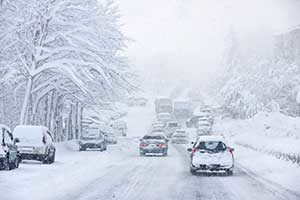
Defensive Driving May Help Avoid a Snowstorm Accident
Every winter, snow and ice transform ordinary roads into some of the most hazardous driving conditions of the year. Stopping distances lengthen, visibility drops, and a single patch of black ice can send even an experienced driver into a skid. While no driver can control the weather, defensive driving techniques can meaningfully reduce the risk of a serious crash — and understanding those techniques matters both for personal safety and, when a snowstorm accident does happen, for understanding how liability may be assessed afterward.
Why Snowstorms Are So Dangerous for Drivers
Winter weather does not just make roads slippery. It changes nearly every variable that goes into safe driving. Snow and blowing wind reduce visibility, sometimes suddenly enough that a driver has only a second or two to react to a stopped vehicle or a hazard in the road. Snow-covered lane markings and signage make it harder to judge lane position and upcoming turns. Bridges and overpasses freeze before the rest of the roadway does, creating unexpected ice patches even when the surrounding pavement looks clear. And braking distances on snow and ice can be two to ten times longer than on dry pavement, meaning a following distance that feels safe on a summer day can be dangerously inadequate in a storm.
These conditions combine to make winter driving a leading cause of seasonal crash spikes. Multi-vehicle pileups, single-car spinouts, and jackknifed trucks become far more common whenever a storm moves through a region, and injuries sustained in these crashes are often more severe than a comparable accident in dry conditions, simply because vehicles are traveling out of control for longer distances before impact.
What Defensive Driving Means in Winter Conditions
Defensive driving is, at its core, the practice of anticipating hazards before they materialize and adjusting your driving to reduce risk, rather than simply reacting to what other drivers do. In good weather, this might mean watching for a distracted driver drifting in an adjacent lane. In a snowstorm, defensive driving takes on a more specific and urgent set of practices.
Slow Down Before You Need To
The single most important defensive driving adjustment in snow is reducing speed well before conditions demand it. Many crashes happen not because a driver was traveling wildly over the speed limit, but because they were driving at a normal speed for the posted limit without accounting for reduced traction. A defensive driver treats the posted speed limit as a ceiling for ideal conditions, not a target, and adjusts downward substantially when snow, ice, or slush is present.
Increase Following Distance Significantly
The standard three-second following distance recommended for dry pavement is not enough in winter weather. Because stopping distances can multiply several times over on snow and ice, defensive drivers extend their following distance to eight to ten seconds or more in hazardous conditions. This extra buffer provides critical reaction time if the vehicle ahead brakes suddenly or loses control.
Avoid Sudden Steering, Braking, and Acceleration
Any abrupt input — a hard brake, a sharp turn, quick acceleration — can break a tire’s already-limited grip on snow or ice and trigger a skid. Defensive drivers make all inputs smooth and gradual: easing onto the brakes early, turning gradually into curves, and accelerating gently from a stop. If a skid does begin, defensive driving technique calls for easing off the accelerator and steering gently in the direction the vehicle needs to go, rather than overcorrecting, which is a common cause of secondary crashes.
Stay Alert to Changing Road Surfaces
Experienced winter drivers watch for the transition points where road conditions change quickly: bridges, overpasses, shaded areas, and intersections where turning traffic compacts snow into ice. These spots often ice over before the rest of the road, and a defensive driver slows down proactively when approaching them rather than discovering the hazard mid-crossing.
Keep Headlights and Windshields Clear
Visibility is one of the first casualties of a snowstorm. Defensive drivers clear all snow and ice from windows, mirrors, and lights before driving — not just the windshield directly in front of the driver — and use low-beam headlights in snow, since high beams can reflect off falling snow and reduce visibility further.
Know When Not to Drive
Perhaps the most overlooked defensive driving decision is choosing not to drive at all when a storm is severe enough. Checking weather and road condition reports before a trip, delaying non-essential travel during a storm, and pulling off the road safely if conditions deteriorate while already driving are all part of a defensive approach that prioritizes avoiding a crash altogether over managing one in progress.
Vehicle Preparation Is Part of Defensive Driving
Defensive driving is not limited to behavior behind the wheel. It also includes preparing a vehicle to handle winter conditions. This means maintaining adequate tire tread depth, checking tire pressure regularly since cold temperatures cause pressure to drop, and using winter or all-season tires rated for snow performance where appropriate. Keeping windshield washer fluid rated for freezing temperatures, ensuring wipers are in good condition, and keeping a full tank of gas or charge in winter weather (both for range and to prevent fuel line freezing in some vehicles) are all part of preparing for a storm before it begins.
How Snowstorm Accidents Are Evaluated Legally
When a snowstorm accident does happen, weather alone rarely eliminates legal responsibility. Courts and insurance companies generally hold drivers to a standard of reasonable care given the conditions, which means a driver is still expected to adjust speed, following distance, and general caution for snow and ice. A driver who travels at the posted speed limit during a snowstorm, loses control, and causes a crash may still be found negligent, because the relevant question is not simply whether they were speeding, but whether their speed and driving behavior were reasonable given the conditions actually present.
This standard means that evidence about how a driver responded to winter conditions often becomes central to a snowstorm accident case. Dashcam footage, weather and road condition reports at the time of the crash, witness accounts of following distance and speed, and even a driver’s own statements about visibility or road conditions can all factor into how liability is assessed.
At the same time, some snowstorm accidents genuinely result from conditions that could not reasonably have been anticipated, such as a sudden ice patch with no prior warning signs on an otherwise clear road, or a mechanical failure caused by extreme cold rather than driver conduct. Distinguishing between a preventable crash and a true accident is often where the legal analysis becomes most complex, and it typically requires a careful look at the specific facts, road maintenance records, and any citations issued at the scene.
What to Do After a Snowstorm Accident
If a crash does happen despite defensive driving precautions, the steps taken immediately afterward can matter both for safety and for any later legal claim. Moving to a safe location if possible, calling for medical attention for anyone injured, documenting the scene with photos of road conditions and vehicle positions, and obtaining a police report are all important. Because winter road conditions change quickly, photos and witness contact information taken at the time of the crash can be far more valuable later than conditions that have since cleared or worsened.
Final Thoughts
No amount of defensive driving can fully eliminate the risks a snowstorm creates, but slowing down, increasing following distance, smoothing out steering and braking, and knowing when to stay off the road altogether can meaningfully reduce the chance of a serious crash. For drivers who are involved in a snowstorm accident despite taking reasonable precautions, understanding how courts and insurers evaluate winter driving conduct can help clarify what happened and what legal options may be available.
This article is intended for general informational purposes and does not constitute legal advice. Anyone involved in a snowstorm-related accident should consult a licensed attorney in their jurisdiction to discuss the specific facts of their case.
Legal Notice per Rules of Professional Responsibility:
The Rhode Island Supreme Court licenses all lawyers and attorneys in the general practice of law, but does not license or certify any lawyer / attorney as an expert or specialist in any field of practice. While this firm maintains joint responsibility, most cases of this type are referred to other attorneys for principle responsibility.