
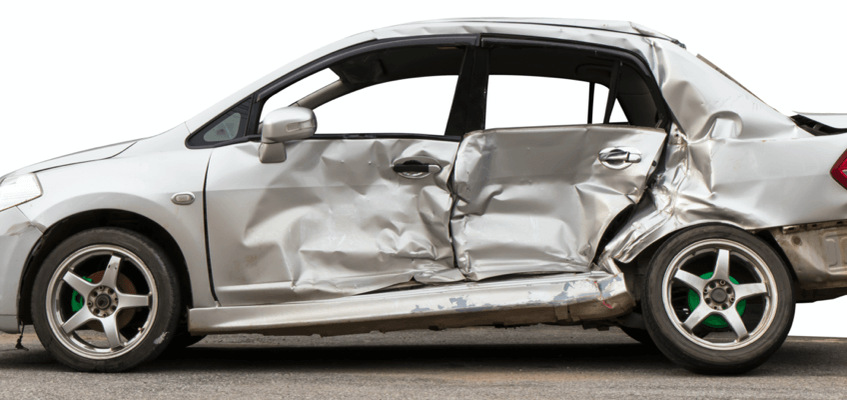
Of all the ways two vehicles can collide, a sideswipe is one of the most deceptively dangerous. From the outside, it can look like a minor fender-bender — a scrape along a door panel, a crumpled side mirror. But because most vehicles are engineered to absorb impact from the front and rear, not the sides, a sideswipe crash often transmits far more force directly into the passenger compartment than a driver would expect. Add in the fact that many sideswipe accidents happen at highway speeds, and it’s easy to understand why these crashes are a leading cause of serious injury on Rhode Island roads.
This guide explains how sideswipe accidents typically happen, why they’re so often complicated to reconstruct, what Rhode Island law says about fault, and what steps an injured driver should take to protect a claim.
Why Sideswipe Accidents Are So Dangerous
Vehicle safety engineering has come a long way over the past few decades, but that progress has been concentrated almost entirely on frontal and rear-impact protection — crumple zones, front airbags, reinforced rear bumpers. The sides of most vehicles simply don’t have the same structural depth to absorb an impact before it reaches the occupants inside. Side curtain airbags help, but they’re designed for a specific type of impact and don’t fully compensate for the lack of physical crumple space.
This vulnerability is magnified in smaller vehicles, sedans, and compact cars, which have less side clearance between the outer panel and the occupant than larger vehicles like SUVs and pickup trucks. A sideswipe that might leave an SUV with cosmetic damage can transmit a dangerous amount of force into a smaller car’s cabin.
Sideswipe crashes are also notoriously difficult to reconstruct after the fact. Unlike a rear-end or head-on collision, where the point of impact and the vehicles’ relative positions are often fairly clear, sideswipe collisions frequently involve two vehicles moving in the same general direction at similar speeds, with contact that may last only a fraction of a second along a moving contact patch. Investigators often have to rely heavily on paint transfer analysis, scrape patterns, lane markings, and witness accounts to determine which vehicle actually drifted or merged into the other’s path.
Two Distinct Categories of Sideswipe Crashes
Not all sideswipe accidents happen the same way, and the category matters both for safety and for how a legal claim gets built.
Opposite-Direction Sideswipes
These crashes occur when two vehicles traveling in opposite directions make contact — most often on two-lane roads without a physical median separating the lanes of travel. Insurance industry data indicates that a large majority of sideswipe collisions fall into this category. They typically happen when a driver drifts across the center line, whether due to distraction, drowsiness, impairment, or simply misjudging the road’s curvature.
Opposite-direction sideswipes carry a particular legal complication: hit-and-run risk. Because contact is often brief and each vehicle continues moving in its original direction after impact, an at-fault driver may not even realize — or may claim not to realize — that a collision occurred. If that driver leaves the scene and cannot later be identified, pursuing compensation can become significantly more difficult, and the case may need to shift toward an uninsured motorist claim instead of a direct claim against the other driver.
Same-Direction Sideswipes
These occur when two vehicles traveling the same way collide along their sides — typically because one vehicle drifted out of its lane, merged without checking for traffic, or attempted to enter the roadway from an on-ramp without verifying the lane was clear. Same-direction sideswipes are somewhat less frequent than opposite-direction collisions, but they are especially common on Rhode Island’s multi-lane highways, including stretches of I-95, I-195, and Route 6, where higher speeds and heavier merge traffic increase the risk.
Same-direction sideswipes are also a frequent trigger for multi-vehicle pileups. When one vehicle sideswipes another at highway speed, the struck vehicle is often forced to swerve, brake suddenly, or lose control, which can draw following vehicles into a chain-reaction collision. These multi-car sideswipe pileups tend to be among the most legally complex cases, since fault may need to be apportioned across three, four, or more vehicles.
What Causes Sideswipe Accidents?
Several recurring factors show up again and again in sideswipe crash investigations:
- Distracted driving. Texting, talking on a hands-free or handheld phone, adjusting a GPS or infotainment system, or engaging with passengers all pull a driver’s attention away from checking blind spots and lane position.
- Failure to check blind spots or mirrors. Many sideswipe crashes come down to a driver simply not looking before moving.
- Improper or unsafe merging. Entering a highway or changing lanes without verifying the lane is clear is one of the most common triggers for same-direction sideswipes.
- Failure to yield the right-of-way. Particularly at intersections, a driver turning without properly checking oncoming or adjacent traffic can clip another vehicle’s side.
- Aggressive driving. Weaving between lanes, tailgating, and abrupt lane changes in heavy or congested traffic significantly raise sideswipe risk.
- Impaired driving. Alcohol, drugs, and even certain prescription medications slow reaction time and impair a driver’s ability to maintain a consistent lane position.
- Reduced visibility. Poor lighting, glare, obstructed sightlines, and blind spots created by vehicle design or roadway geometry all contribute to sideswipe risk, especially at intersections.
- Weather and road conditions. Rain, snow, ice, and fog reduce both visibility and traction, making it harder for drivers to react in time to avoid drifting into an adjacent lane.
Sideswipe Accidents at Intersections
While many people picture sideswipe crashes as a highway phenomenon, a significant number occur at intersections — and these can be particularly dangerous. Several factors converge at intersections to raise the stakes:
- Higher-consequence speeds. Even at moderate intersection speeds, a sideswipe impact can be severe enough to cause serious injury, particularly when a driver is accelerating through a turn or a yellow light.
- Reduced visibility. Parked cars, buildings, signage, and other obstructions common at urban and suburban intersections create blind spots that aren’t present on open highways.
- Failure-to-yield turns. A driver attempting to turn without fully checking for oncoming or crossing traffic is one of the most common causes of intersection sideswipes — clipping the side of a vehicle that had the right-of-way.
- Distraction and impairment. The same behaviors that cause sideswipes elsewhere are magnified at intersections, where drivers have less time and space to correct a mistake.
- Aggressive maneuvering in congestion. Urban intersections often see drivers weaving between lanes or attempting last-second turns to avoid a red light, both of which are common precursors to sideswipe crashes.
Reducing this risk starts with the basics: obeying posted speed limits, staying attentive, and being especially cautious when entering or crossing an intersection. Infrastructure also plays a role — clear signage, well-maintained lane markings, and adequate lighting all measurably reduce intersection sideswipe risk, which is why roadway design sometimes becomes relevant in more complex cases involving a municipality or state transportation agency.
Rhode Island Law and Sideswipe Accidents
Rhode Island’s motor vehicle code, found in Title 31 of the Rhode Island General Laws, provides the legal framework for determining fault in most sideswipe cases.
Laned roadway violations (§ 31-15-11). This is typically the central statute in a same-direction sideswipe case. It requires that a vehicle be driven, as nearly as practical, entirely within a single lane, and prohibits a driver from moving out of that lane until first confirming the movement can be made safely. A driver who drifts across a lane line, or who merges without first checking that the target lane is clear, is very often found to have violated this statute.
Failure to yield right-of-way (§ 31-17-1 and related sections). This set of statutes governs situations where a driver — often while turning — fails to properly yield to oncoming or crossing traffic, a frequent cause of intersection sideswipes.
Turn signal requirements (§ 31-16-5 and § 31-16-6). Rhode Island law requires drivers to signal turns and lane changes with reasonable advance notice. A driver who changes lanes or turns without signaling deprives nearby drivers of the warning they need to avoid a collision.
Reckless and aggressive driving (§ 31-27-1 and § 31-27.1-3). Weaving, tailgating, and abrupt unsafe lane changes can elevate a sideswipe case from ordinary negligence into reckless or aggressive driving, which carries additional penalties and can strengthen a civil claim.
A citation issued under any of these statutes — or even an uncited but clearly documented violation — becomes important evidence in a personal injury claim, because it gives an injured driver a concrete legal standard the other driver failed to meet.
Proving Fault: Why Witnesses and Evidence Matter So Much
Because sideswipe accidents are inherently difficult to reconstruct, the quality of evidence gathered — often within minutes of the crash — can make or break a claim. This is especially true in hit-and-run scenarios, where the struck vehicle is knocked off the road or badly damaged while the at-fault driver continues on, sometimes because that driver is intoxicated or uninsured and has a strong incentive to avoid contact with police.
Witnesses are frequently the single most valuable piece of evidence in these cases. A witness who can describe how the collision occurred, or who captured a photo of a license plate before the offending vehicle left the scene, can be the difference between a straightforward claim and one that stalls out for lack of an identifiable defendant.
Other evidence commonly used to establish fault in a Rhode Island sideswipe case includes:
- The official police accident report
- Paint transfer and scrape pattern analysis on both vehicles
- Photos and video of skid marks, lane markings, and the final resting positions of the vehicles
- Traffic or nearby security camera footage
- Cell phone records, which can reveal whether a driver was texting or on a call at the time of the crash
- Accident reconstruction expert analysis in disputed or high-value cases
An experienced Rhode Island car accident attorney can subpoena cell phone records and other evidence that an injured driver typically cannot obtain on their own, which is one reason early legal involvement matters in cases where fault is unclear or contested.
Rhode Island’s Comparative Negligence Rule
Sideswipe cases frequently involve disputes over exactly which driver crossed into the other’s lane, which makes Rhode Island’s approach to shared fault especially relevant. Rhode Island follows a pure comparative negligence rule under R.I. Gen. Laws § 9-20-4.
Under this rule, an injured driver’s own negligence — even if significant — does not automatically bar them from recovering compensation. Instead, a jury’s damages award is reduced in proportion to that driver’s share of fault. A driver found to be 25 percent responsible for a sideswipe crash can still recover 75 percent of their damages from the other driver. This matters enormously in sideswipe litigation, where insurance companies often argue that the injured driver could have avoided the collision by staying further from the lane line or reacting sooner.
Injuries Commonly Caused by Sideswipe Accidents
Because sideswipe collisions strike the least-protected part of a vehicle, injuries are often more serious than the visible vehicle damage would suggest. Commonly reported injuries include:
- Whiplash and other soft tissue injuries to the neck and back
- Concussions and traumatic brain injuries, particularly when the head strikes a window or door frame
- Fractures to the arm, shoulder, hip, or ribs on the impacted side
- Lacerations from broken glass or intruding sheet metal
- Spinal cord injuries in more severe collisions, especially at highway speeds
- Injuries sustained during a resulting loss of control, rollover, or secondary collision
Compensation in a successful sideswipe injury claim can include medical expenses (both past and anticipated future costs), lost wages and diminished future earning capacity, vehicle repair or replacement costs, and pain and suffering. In hit-and-run cases or those involving an uninsured driver, a Rhode Island driver’s own uninsured/underinsured motorist (UM/UIM) coverage — an optional policy add-on — can serve as an important source of recovery.
Statute of Limitations for Sideswipe Accident Claims in Rhode Island
Rhode Island generally provides three years from the date of an accident to file a personal injury lawsuit. When a sideswipe accident results in a death, the same three-year period applies to a wrongful death claim, though the clock begins running from the date of death rather than the date of the crash. Property-damage-only claims fall under a much longer ten-year catch-all statute of limitations.
These are court filing deadlines, not insurance reporting deadlines. Most insurance policies require notice of a claim far sooner — typically within days or a few weeks of the crash — so prompt reporting is essential even when a lawsuit isn’t yet on the table.
What to Do If You’ve Been in a Sideswipe Accident
- Call the police, even for what looks like minor damage. A police report creates an official record and may include citations that support your claim later.
- Try to identify the other vehicle, especially in a possible hit-and-run. A license plate number, vehicle description, or direction of travel can be critical if the other driver leaves the scene.
- Look for witnesses immediately. Ask bystanders or nearby drivers if they saw what happened, and get their contact information before they leave.
- Photograph everything. Paint transfer marks, scrape patterns, vehicle positions, lane markings, and the surrounding roadway can all help reconstruct how the collision occurred.
- Get medical attention promptly, even if injuries seem minor at first. Soft tissue injuries and concussions often don’t present obvious symptoms right away.
- Avoid speculating about fault at the scene. Sideswipe liability is often genuinely unclear in the first moments after a crash, and statements made in the heat of the moment can complicate a claim later.
- Consult a Rhode Island car accident attorney before speaking with an insurance adjuster. An attorney can help preserve evidence — including cell phone records and camera footage — before it disappears.
Frequently Asked Questions
Why are sideswipe accidents so dangerous compared to other minor-looking collisions?
Because most vehicles have far less structural protection along their sides than at the front or rear, sideswipe impacts can transmit significant force into the passenger compartment even when the visible exterior damage looks minor.
What happens if the other driver leaves the scene after a sideswipe accident?
This is treated as a hit-and-run. Witness information, license plate details, and traffic or security camera footage become especially important, and an injured driver may need to pursue a claim through their own uninsured motorist coverage if the at-fault driver cannot be identified.
Who is usually at fault in a same-direction sideswipe accident?
The driver who drifted out of their lane or merged without confirming the lane was clear is typically found primarily at fault, though the other driver’s speed, following distance, and attentiveness can also factor into the final determination.
Can I recover compensation if I was partly at fault for a sideswipe accident?
Yes. Under Rhode Island’s pure comparative negligence rule, an injured driver can recover compensation even if they share some responsibility for the crash — their damages are simply reduced by their percentage of fault.
How long do I have to file a lawsuit after a sideswipe accident in Rhode Island? Generally three years from the date of the accident, though the specific deadline can vary depending on the facts of your case, so it’s best to confirm your timeline with an attorney as soon as possible.
Conclusion
Sideswipe accidents occupy a strange middle ground in the world of car crashes: they can look minor from the outside while causing genuinely serious injury, and they’re often among the hardest collisions to reconstruct after the fact. Whether a sideswipe happens on an open highway, during a highway merge, or at a congested intersection, Rhode Island law — through statutes like § 31-15-11 and the state’s rules on right-of-way and signaling — provides a clear framework for establishing fault. Combined with Rhode Island’s pure comparative negligence rule, injured drivers have a real path to compensation even in cases where liability is contested. Acting quickly to gather evidence, identify witnesses, and consult an experienced Rhode Island car accident attorney gives victims the best chance of protecting that claim.
This article is provided for general informational purposes only and does not constitute legal advice. Laws and statutory citations are current as of publication but may change over time. Anyone involved in a car accident should consult a licensed Rhode Island attorney to evaluate the specific facts of their case.